
Claude Disabled: Rise of Local AI Solutions
June 18, 2026
AI Policy, Local AI, Anthropic News
Claude Disabled for Advanced Models: Why Home and Local AI Are Surging
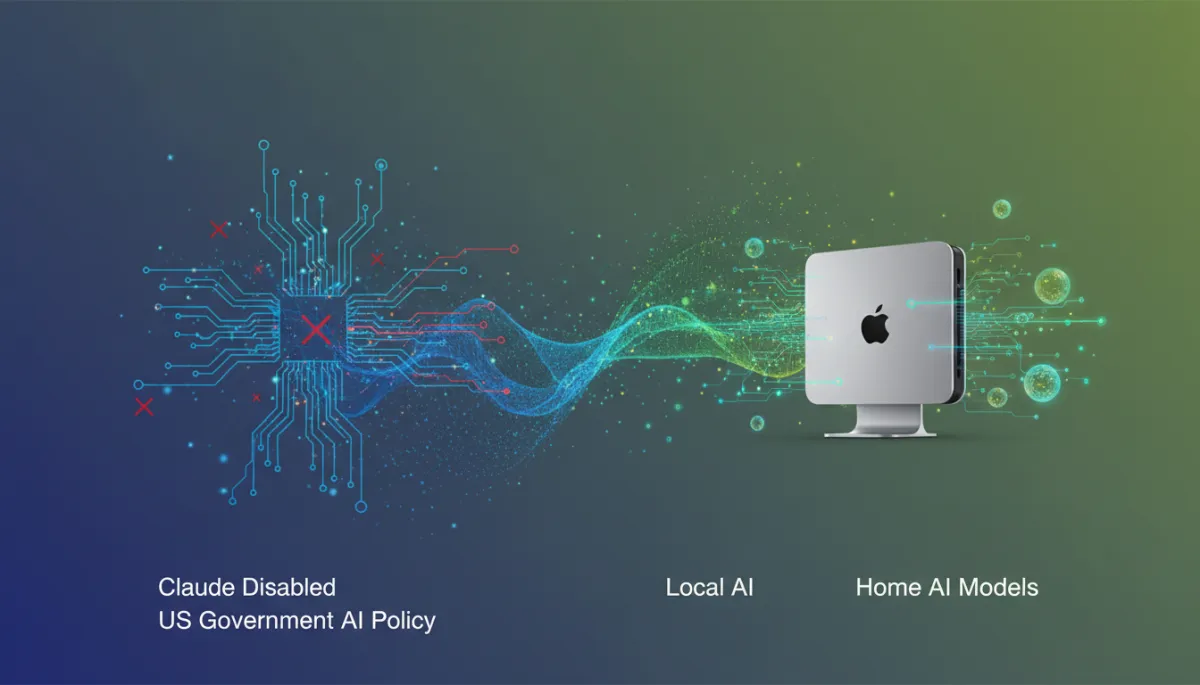
The recent decision that left Anthropic’s most powerful Claude models disabled under a U.S. government order is reshaping how many people think about artificial intelligence. At the same time, interest in Local AI running on devices such as the Mac Mini is accelerating, as users look for more control, privacy, and resilience in their AI tools.
What It Means That “Claude Is Disabled”
Headlines suggesting “Claude Disabled” can be misleading. In reality, the U.S. government ordered Anthropic to halt access to its two most advanced models, Claude Fable 5 and Claude Mythos 5, for foreign nationals due to national security concerns. Because Anthropic could not reliably separate users by nationality, it chose to disable these models globally, as detailed in recent Anthropic News updates and coverage by outlets such as Forbes and Tom’s Hardware.
The trigger was a reported “jailbreak” that could, in narrow circumstances, allow the model to help analyze software vulnerabilities. U.S. officials viewed this as a potential cyber risk. Under the current US Government AI Policy environment, that was enough to justify an export control order. Importantly, the broader Claude family remains online; it is the frontier models that are temporarily unavailable.
A Turning Point in US Government AI Policy
This episode marks one of the most assertive interventions yet in commercial AI. By forcing Claude Fable 5 and Mythos 5 offline, regulators signaled a willingness to act quickly when they believe national security is at stake. Anthropic has criticized the move as disproportionate and warned that similar standards, if applied broadly, could slow progress across the sector.
For individuals and small teams, the practical lesson is clear: relying entirely on remote, proprietary models leaves you exposed to decisions far outside your control. When a single order can render a powerful Claude model disabled worldwide overnight, many users understandably begin exploring alternatives that are less vulnerable to sudden policy shifts.
📌 Key Takeaway: Centralized cloud AI is increasingly shaped by geopolitics and export controls, not just by technology and market demand.
Why Local AI Is Gaining Momentum
Against this backdrop, Local AI—models that run directly on your own hardware—is moving from a niche interest to a mainstream strategy. Home AI Models installed on personal machines offer three key advantages:
Resilience: Your tools are less likely to vanish overnight due to an export control or licensing change.
Privacy: Sensitive data can stay on your own device instead of being sent to a remote server.
Customization: You can choose which models to run, how they are configured, and when they are updated.
When users see a leading cloud model like Claude partially disabled by government action, it reinforces the appeal of a more self-reliant setup. Even if cloud AI remains central for many tasks, Local AI increasingly plays a complementary role, acting as a dependable “fallback” and private workspace.
Mac Mini AI: The Home Server for Personal Models
One of the most visible beneficiaries of this shift is the Mac Mini. Thanks to Apple Silicon and strong support for on-device inference, the compact desktop has become a popular platform for Mac Mini AI workloads. Developers and enthusiasts are running small and medium-sized language models, multimodal tools, and always-on agents directly from their homes or offices.
Apple’s own Apple Foundation Models (AFM 3) reflect this trend. With macOS “Golden Gate,” features such as a more conversational Siri, enhanced Spotlight, and “Write with Siri” are powered by models that can often run locally on M3 and M4-class hardware. At the same time, third-party tools allow users to download and operate open models entirely offline, turning a Mac Mini into a dedicated Local AI node that serves laptops, tablets, and phones around the house.
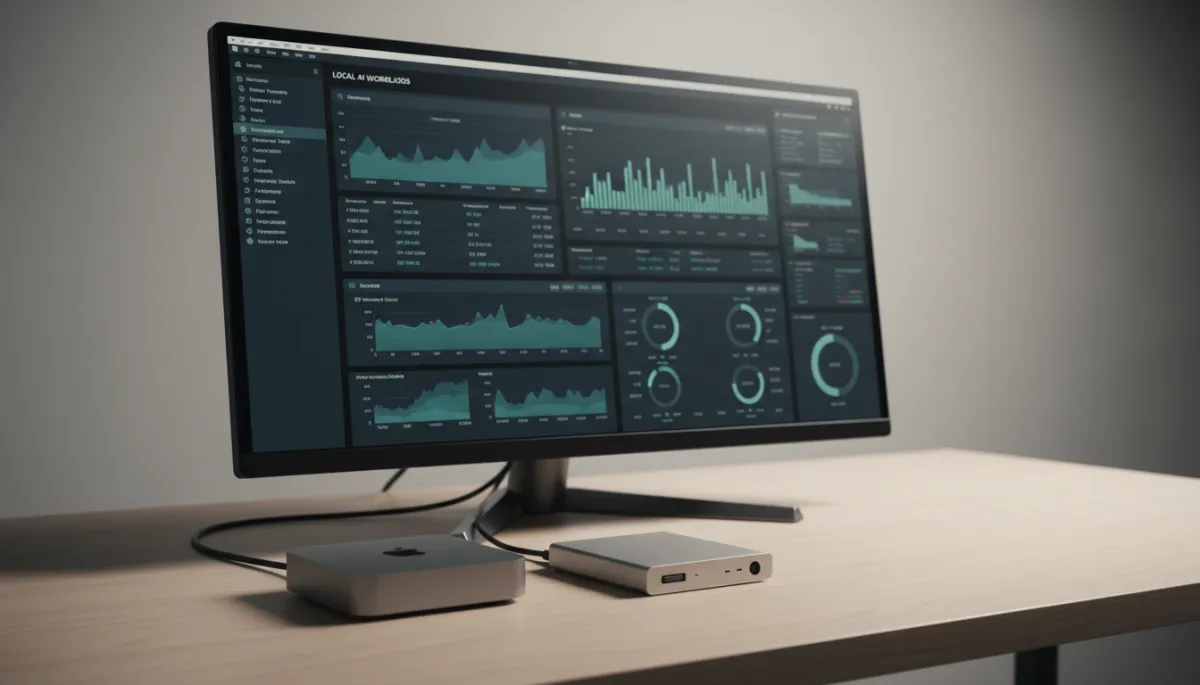
Many users now treat the Mac Mini as a 24/7 home AI server for local models.
From Cloud-First to Hybrid: How Users Are Adapting
The most common response to the Claude Disabled headlines is not to abandon cloud AI altogether, but to adopt a hybrid mindset. Many individuals now:
Use cloud models for cutting-edge reasoning and broad knowledge, while maintaining Home AI Models for private documents, notes, and experiments.
Run Mac Mini AI instances as always-available assistants, even if their internet connection or a particular provider is temporarily unavailable.
Keep an eye on Anthropic News and broader US Government AI Policy updates to anticipate potential disruptions and plan accordingly.
💡 Pro Tip: If you rely on AI for critical work, consider pairing at least one cloud provider with a capable Local AI setup so policy or outage events do not halt your workflows.
Looking Ahead: Policy, Providers, and Personal Infrastructure
The story of Claude Fable 5 and Mythos 5 being disabled under government order is likely a preview of what is to come. As models grow more capable, export controls, safety debates, and geopolitical competition will continue to shape what is available, where, and to whom. For everyday users and small organizations, the most practical response is not panic, but preparation.
Building a modest Local AI environment—whether on a Mac Mini, another desktop, or even a compact server—offers a measure of independence in an uncertain landscape. Cloud models like Claude will remain central to the AI ecosystem, but as recent Anthropic News makes clear, they are also subject to forces beyond any single user’s control. Combining the strengths of cloud and local systems is emerging as the most resilient path forward for anyone serious about integrating AI into daily life.